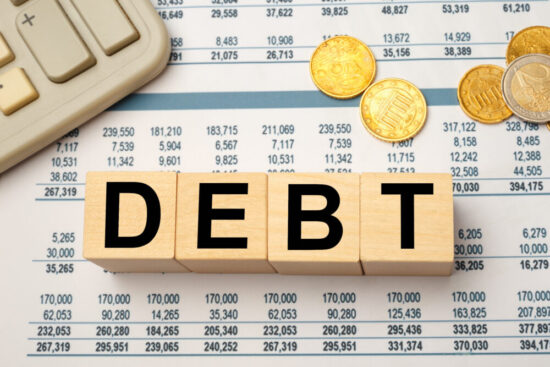
Bad debt occurs when a business extends a customer credit, and the buyer fails to make the required payments to settle the amount owed. In the simplest sense, a bad debt expense is a financial transaction that a business needs to list to properly record its losses relating to the bad debt if it previously recorded the purchase amount as revenue. If you’re wondering about how to calculate bad debt expense, here’s what you need to know.
Why Calculate a Bad Debt Expense
Since revenue figures play a role in a variety of business decisions, knowing precisely how much the company is bringing in is essential. Otherwise, company leaders may make choices based on inaccurate data, something that could put the company in a precarious position. Plus, it could increase the odds of making incorrect moves regarding taxes and specific financial filings, which is similarly problematic.
As mentioned above, calculating a bad debt expense allows companies that previously recorded the total value of the purchase as revenue to essentially correct that information. That results in more accurate financial records and revenue reporting, ensuring revenues don’t appear higher than they are in reality.
Additionally, calculating and recording a bad debt expense can serve as a warning in the future. Company leaders know which customers previously failed to meet the terms of the credit agreement. That information can then be provided to employees who engage with that customer, ensuring credit isn’t issued again. That prevents the same issue from recurring, eliminating financial losses related to new bad debts with that customer.
How to Calculate a Bad Debt Expense
Generally, calculating a bad debt expense is potentially straightforward. If you’re writing it off in your accounts receivable, you can record the amount owed that’s currently unpaid as a general ledger entry. That functionally offsets any previously listed revenue that isn’t getting repaid by the customer.
However, the method above is typically only beneficial if your company doesn’t offer much credit or rarely experiences bad debt expenses. If you provide credit to a wide array of customers, using the allowance method to address bad debts is potentially a more efficient choice.
First, you establish an allowance for bad debts, which is also referred to as an allowance for doubtful accounts or bad debt reserve. That gives you a functional business expense category – technically known as a contra-asset – where you can draw funds you’ve set aside to address the bad debts.
In most cases, you can use a percentage of bad debt formula to establish the allowance. Divide the total value of bad debts by the full value of credit sales. Then, convert the result into a percentage by multiplying it by 100.
For example, if the bad debts total $15,000 and the total credit sales are $250,000, you’d divide the former by the latter and get 0.06. Multiply that by 100, and your bad debt percentage is 6 percent.
Then, to create the allowance, multiply the bad debt percentage by the estimated credit sales total for the upcoming year. If you expect to have credit sales of $300,000 and have a 6 percent bad debt percentage, that would lead to an allowance of $18,000.
When bad debts occur, you create financial entries that show the offset coming from the allowance. That allows you to offset previously listed revenue based on the use of the contra-asset.
Do you have any other tips that can help someone figure out how to calculate bad debt expense? Share your thoughts in the comments below.
Read More:
- Understanding the Common Causes of Credit Card Debt
- 8 Strategies to Pay Off Debt Quickly
- How to Build Credit Without Getting into Debt
Come back to what you love! Dollardig.com is the most reliable cash back site on the web. Just sign up, click, shop and get full cash back!

Tamila McDonald is a U.S. Army veteran with 20 years of service, including five years as a military financial advisor. After retiring from the Army, she spent eight years as an AFCPE-certified personal financial advisor for wounded warriors and their families. Now she writes about personal finance and benefits programs for numerous financial websites.
Read More


I like finding the hidden costs in personal finances. Hidden costs are those costs that…

It's one of the worst feelings you can ever have. That moment when you see…
Debt Collection Changes How many times do you question a friend request on social…

There are huge disadvantages of having no credit score. I actually know this better than…

When you borrow money today, you are robbing your future self of funds you may…

Are you a veteran struggling with debt? It may be time to consider consolidating your…
Comments